TORNADOES
Tornadoes don't wait. They can touch down with little to no warning, and the difference between a close call and a catastrophe often comes down to preparation you did long before the sky turned green.
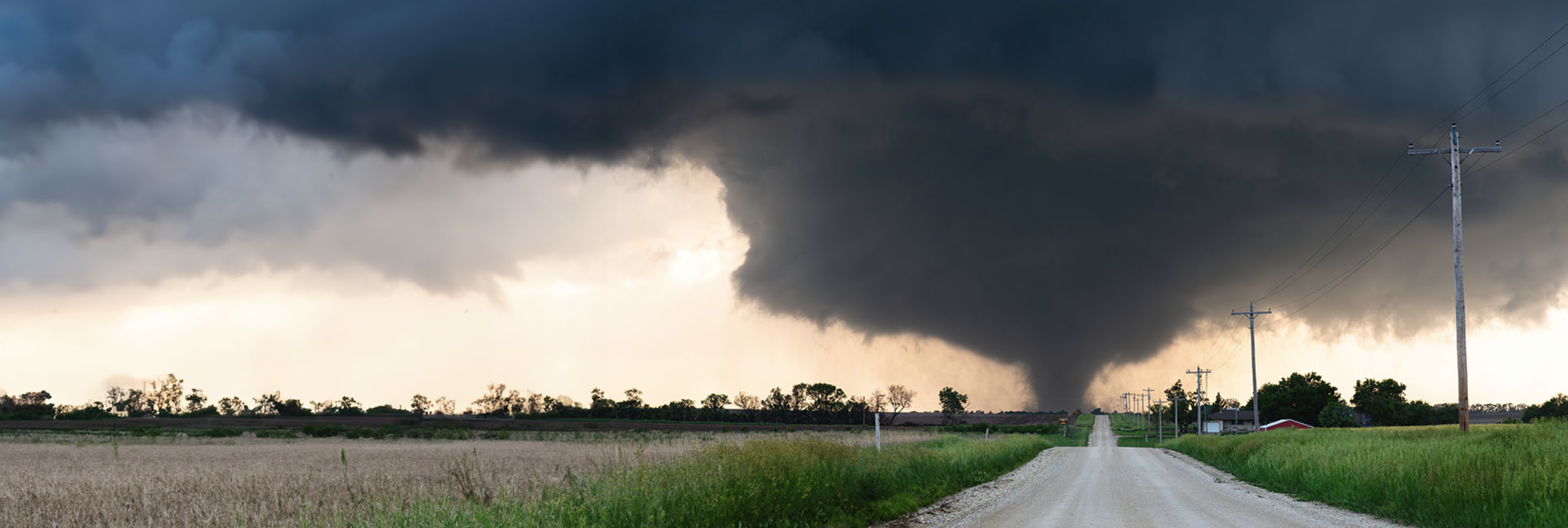
What Is a Tornado? A tornado is a violently rotating column of air extending from a thunderstorm to the ground, with winds that can exceed 300 mph in the most powerful storms. Unlike hurricanes, tornadoes can strike with only minutes of warning and follow unpredictable paths. Tornado season peaks in spring and early summer, but tornadoes can and do occur year-round in many parts of the country.
key risks
wind impact
1
Direct wind impact can strip a roof, collapse walls, and reduce a home to a slab in seconds — even an EF2 causes significant structural damage
flying debris
2
Flying debris is responsible for the majority of injuries and deaths, and can penetrate walls and windows with little resistance
Mobile and Manufactured Homes
3
Mobile and manufactured homes are especially vulnerable and should be evacuated even for tornado watches
Downed Power Lines
4
Downed power lines and gas leaks create fire and electrocution hazards in the aftermath
structural damage
5
Structural damage may not be visible from the outside, making post-storm assessment critical before re-entry
how to protect your home
1.
Know where your safe room is — before you need it.
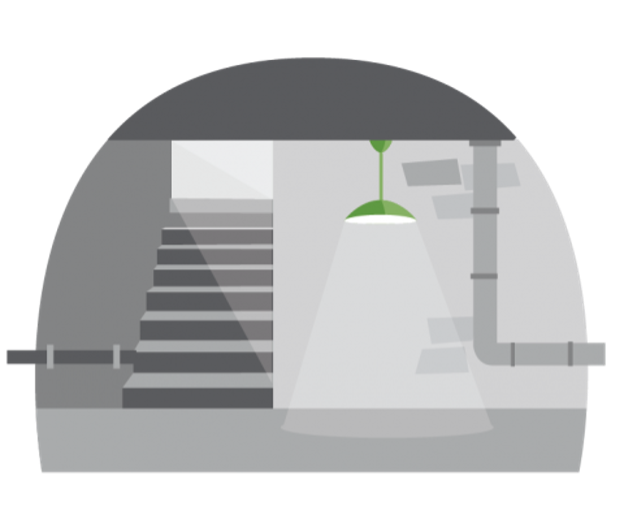
The safest place during a tornado is an interior room on the lowest floor, away from windows — a bathroom, closet, or basement. If you have the option to build or install a FEMA-rated storm shelter or safe room, it is the single most effective investment you can make. Don't wait until sirens are going off to figure out where you're going. → See our Safe Room Guide in Home Protection
3.
Secure your roof-to-wall connection.
Hurricane straps or clips — metal connectors that tie your roof structure to your walls — dramatically reduce the chance of roof loss during extreme winds. If your home was built before 2000, there's a good chance you don't have them.
5.
2.
Reinforce your garage door.
Garage doors are the most vulnerable entry point in most homes during high winds. A braced or wind-rated garage door can prevent the kind of pressure breach that leads to roof failure. Ask your installer about hurricane/tornado bracing kits.
4.
Protect windows and doors.
Impact-resistant windows and doors won't stop a direct hit, but they significantly reduce debris penetration and help maintain structural integrity. At minimum, keep window treatments closed and stay away from glass when a warning is issued. → Best window and doors to install in a tornado prone area.
Have a communication and reunification plan.
Tornadoes can strike fast enough that family members are separated. Decide in advance where you'll shelter, where you'll meet if you can't reach home, and how you'll communicate if cell networks go down. A battery-powered weather radio is essential — don't rely solely on your phone.
10 Inexpensive Home Improvements You Can Make Before Tornado Season
Get Your Free Tornado Preparedness Checklist When the warning sounds, you won't have time to think. Our free checklist covers everything you need to do before, during, and after a tornado — so the decisions are already made. → Get the Free Checklist (link to Free Checklists page or Kit form)
Protect your home
10 home improvements to prepare for TORNADOEs
-
Cost: $30–$60 per window
Tools/Products: ½-inch plywood sheets, circular saw, drill, screws, tape measure, marker.
How-To:Measure each window’s height and width.
Cut plywood panels to size with a 4-inch overlap on all sides.
Mark each panel with its window location (“Front Left,” “Kitchen,” etc.).
Drill holes every 12–18 inches around the perimeter.
Pre-install screws or anchors so you can mount panels quickly before a storm.
-
Cost: $20–$100
Tools/Products: Door braces, slide bolts, metal reinforcement kits, screwdriver/drill.
How-To:For exterior doors, install slide bolts (top and bottom) to prevent bowing.
For garage doors, add a bracing kit or vertical supports to strengthen against wind.
Check and replace any rusted hinges or worn weatherstripping.
-
Cost: $10–$30
Tools/Products: Exterior caulk (silicone/polyurethane), weatherstripping tape, caulk gun.
How-To:Inspect windows, doors, and wall penetrations (pipes, vents).
Clean the area, then apply caulk smoothly around edges.
Add weatherstripping to doors and windows to prevent wind-driven rain entry.
-
4. Secure Outdoor Items
Cost: $0–$20
Tools/Products: Bungee cords, rope, zip ties, storage bins.
How-To:Tie down or move lightweight furniture, potted plants, and tools indoors.
Store small objects (grill accessories, garden tools) in bins or your garage.
Anchor heavy outdoor items (e.g., sheds, gazebos) with straps or ground anchors.
-
Cost: $0–$10,000
Tools/Products: Anchors/straps, metal braces/brackets, metal sheeting, rebar, concrete blocks, cement.
How-To:The safe room must be adequately anchored to resist overturning and uplift.
The walls, celing, and door of the safe room must withstand wind pressure and resist penetration by windborne debris and falling items such as trees.
The connections between all parts of the safe room must be strong enough to resist the wind forces without failing.
The safe room must be located outside of areas with a high risk of flooding or storm surge inundation.
-
Cost: $0–$30
Tools/Products: Pruning saw, loppers, gloves, ladder.
How-To:Trim branches that hang over your roof or power lines.
Cut weak or dead limbs that could become projectiles.
Do this at least once a year before tornado season.
-
ICost: $15–$60
Tools/Products: Surge protectors, plastic covers, duct tape, small platform or cinder blocks.
How-To:Use surge protectors on electronics.
Cover outdoor HVAC units with a waterproof tarp secured by bungee cords.
Elevate outdoor systems or generators slightly to reduce flood exposure.
-
Cost: $10–$40
Tools/Products: Shovel, gravel, flexible drainpipe extensions.
How-To:Ensure soil slopes away from your home’s foundation.
Add drain extensions to downspouts.
Fill low spots in the yard where water tends to pool.
-
Cost: $20–$60
Tools/Products: LED lanterns, solar lights, battery packs, extension cords.
How-To:Charge and store power banks.
Place solar pathway lights indoors at night for emergency lighting.
Keep batteries and flashlights in a labeled bin near your emergency kit.
-
Cost: $0–$25
Tools/Products: Plastic bins, zip bags, permanent marker.
How-To:Group items by use (first aid, tools, food, lighting).
Label bins clearly and keep in an accessible interior spot.
Include key tools: wrench, screwdriver set, duct tape, utility knife, gloves.
Preparing your home for severe storms is critical to protecting your property and ensuring your safety. Start by reinforcing your windows and doors. Installing shutters or impact-resistant windows can significantly reduce the risk of glass shattering under high winds and flying debris. If permanent shutters aren't an option, securely fasten plywood panels over windows and glass doors before the storm hits.
Next, focus on your roof. Inspect it thoroughly and replace any damaged or missing shingles. Consider installing straps or clips to strengthen the roof-to-wall connections, making it less likely to rip off during strong winds.
Additionally, secure outdoor items that could become dangerous projectiles. Bring in patio furniture, grills, and any loose objects, or tie them down firmly. Trim trees and remove dead branches that could cause damage if torn loose in the storm.
Finally, prepare a safe room or shelter to retreat to; no structure is tornado-proof, so reinforcing a safe room or designating an underground shelter is essential.
Taking these proactive steps not only protects your home from catastrophic damage but also gives you peace of mind when a tornado approaches. Don’t wait until the last minute—start your preparations early to weather the storm with confidence.
PREPARE YOUR FAMILY
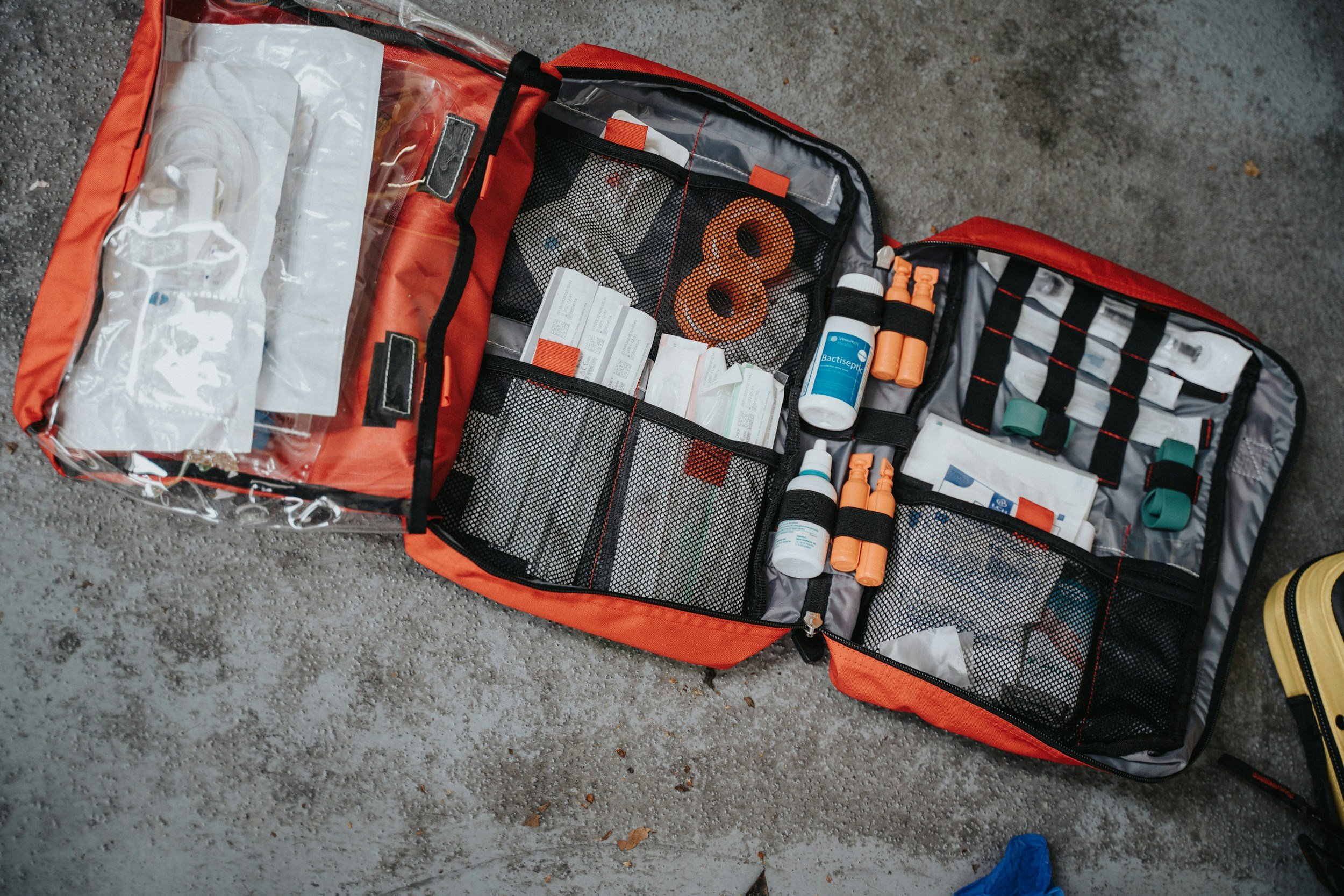
Start by assembling an emergency kit stocked with water, non-perishable food, batteries, flashlights, a first-aid kit, and important documents in waterproof containers.
Develop an evacuation plan, including multiple routes and a designated meeting spot for family members.
Stay informed by monitoring weather updates from reliable sources and sign up for local emergency alerts.
Lastly, communicate your plans with neighbors and loved ones to stay connected throughout the storm.
Find Resources
TO GET READY
Homeowners preparing for a tornado have access to a variety of critical resources designed to ensure safety and minimize damage.
The Federal Emergency Management Agency (FEMA) offers detailed preparedness guides, checklists, and emergency kit recommendations.
Local government websites provide updates on shelter locations, while the National Weather Service delivers real-time storm tracking and alerts.
Additionally, community centers often host informational workshops on safety protocols and emergency planning.
For structural protection, resources on reinforcing a safe room or building a shelter are widely available through home improvement organizations and weatherproofing specialists.
Utilizing these tools proactively can significantly enhance a home's resilience before a hurricane strikes.
After a tornado, homeowners have access to several critical resources to aid in recovery and rebuilding.
Federal agencies like FEMA provide emergency financial assistance and grant programs to cover temporary housing, repairs, and essential needs.
The Small Business Administration (SBA) offers low-interest disaster loans for homeowners to repair or replace damaged property.
State and local governments often have additional relief programs and can connect residents to immediate aid, shelters, and cleanup efforts.
Nonprofit organizations, such as the American Red Cross and local community groups, provide essential services including food, clothing, and rebuilding support.
It’s vital for homeowners to document all damage thoroughly, file claims promptly with insurance providers, and leverage these available resources to expedite recovery.
FoR RECOVERING
Articles